
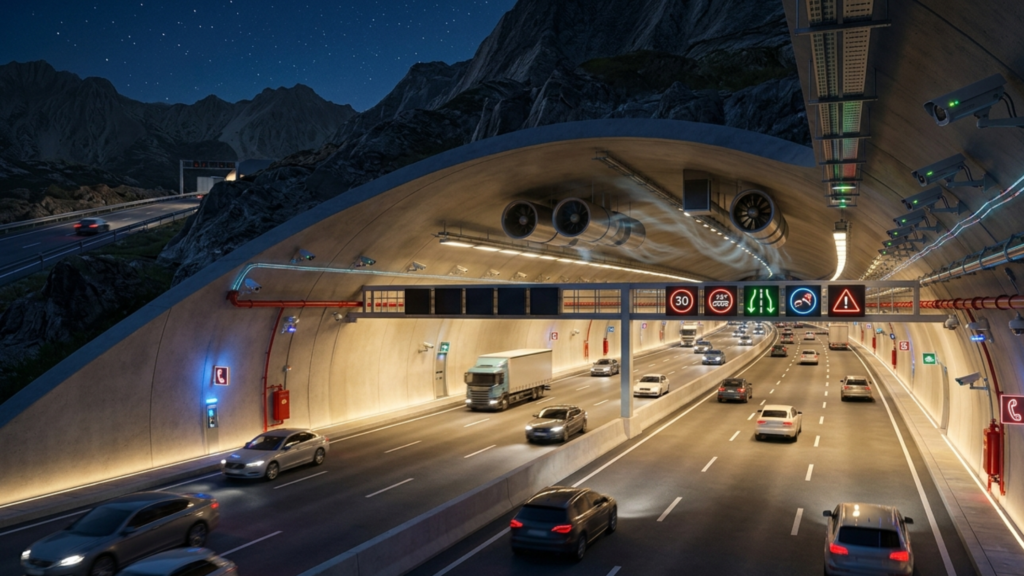
Driving through tunnels can feel risky, especially when visibility is low or traffic is heavy. Unlike open roads, tunnels have limited space, controlled lighting, and fewer escape options. That’s why tunnel safety systems are very important.
Today, modern technology is making tunnels much safer. With smart systems, real-time monitoring, and automated alerts, drivers are now better protected than ever before.
Why Tunnel Safety Matters
Tunnels are different from normal roads. They have:
- Limited natural light
- Less ventilation
- Higher chances of congestion
- Restricted emergency exits
Because of these factors, even a small issue can quickly become dangerous. For example, a vehicle breakdown or fire inside a tunnel can create panic and increase risk.
That’s why safety systems are designed to prevent problems before they happen and respond quickly if something goes wrong.
Key Tunnel Safety Systems That Protect Drivers
1. Smart Lighting Systems
Lighting plays a big role in tunnel safety. Modern tunnels use adaptive lighting that changes based on outside brightness.
When you enter a tunnel during the day, lights gradually adjust so your eyes can adapt easily. This reduces sudden blindness and improves visibility.
2. Ventilation Systems
Air quality inside tunnels must be controlled. Ventilation systems remove smoke, dust, and harmful gases.
In case of fire, these systems help push smoke away, making it easier for drivers to see and exit safely.
3. CCTV and Real-Time Monitoring
Cameras are installed throughout tunnels to monitor traffic 24/7. These systems can:
- Detect accidents
- Identify stopped vehicles
- Monitor traffic flow
Operators can quickly take action and send alerts to drivers.
4. Variable Message Signs (VMS)
Smart LED display boards show real-time information to drivers. These messages can include:
- Speed limits
- Lane closures
- Emergency warnings
This helps drivers make quick decisions and avoid danger.
5. Fire Detection and Response Systems
Tunnels are equipped with advanced fire detection systems. These include:
- Smoke detectors
- Heat sensors
- Automatic alarms
In case of fire, the system activates instantly and alerts both drivers and control rooms.
6. Emergency Communication Systems
Emergency phones and communication systems are placed at regular intervals. Drivers can quickly contact help in case of breakdowns or accidents.
This ensures faster response and better coordination during emergencies.
7. Traffic Control Systems
These systems manage vehicle movement inside tunnels. They can:
- Control speed
- Manage lane usage
- Reduce congestion
By controlling traffic, they help prevent accidents and maintain smooth flow.
How Technology is Making Tunnels Safer
Modern tunnel safety systems are now powered by AI and smart sensors. These technologies can:
- Predict traffic issues
- Detect unusual patterns
- Respond automatically in real time
For example, if a vehicle stops suddenly, the system can instantly alert other drivers through display boards.
This reduces reaction time and prevents accidents.
Benefits of Tunnel Safety Systems
Tunnel safety systems provide many advantages:
- Improve driver visibility
- Reduce accident risk
- Enable faster emergency response
- Maintain smooth traffic flow
- Increase driver confidence
Overall, they create a safer and more controlled driving environment.
The Role of Smart Infrastructure
Today, tunnel safety is not just about equipment. It is about intelligent infrastructure. Companies like Vulcan AI Cluster are working on advanced solutions that combine AI, sensors, and real-time communication.
These systems are helping build tunnels that can monitor, analyze, and respond automatically—making roads smarter and safer.
Conclusion
Tunnel safety systems are essential for protecting drivers in challenging conditions. From lighting and ventilation to AI-powered monitoring, every system plays an important role.
As technology continues to evolve, tunnels are becoming safer, smarter, and more efficient.
The future of road safety lies in intelligent systems that not only react-but think ahead.

