
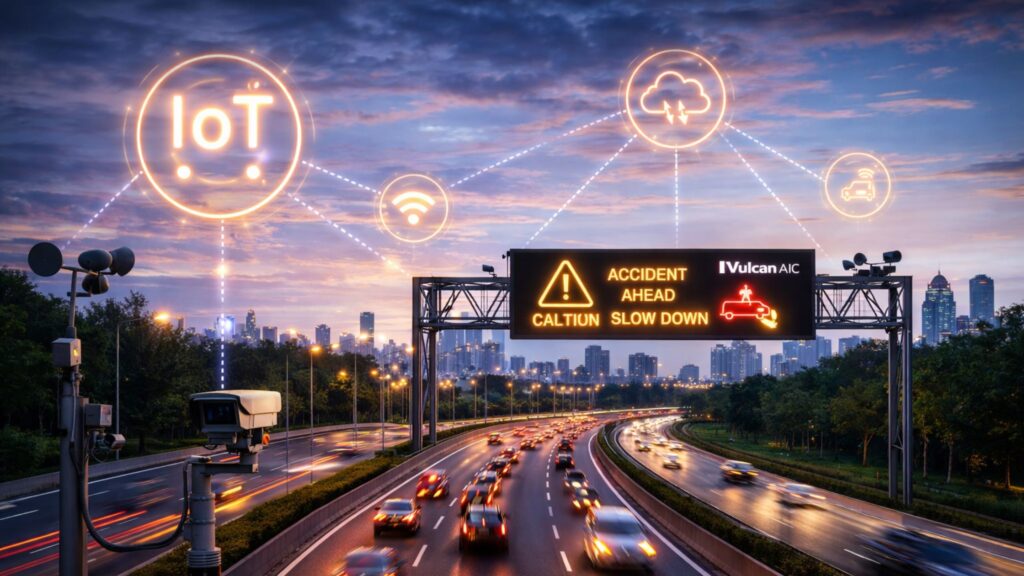
India is rapidly moving towards smart infrastructure. Highways are no longer just roads that connect cities. Today, they are becoming intelligent systems that can monitor, analyze, and respond to real-time conditions.
One of the key technologies behind this transformation is the Internet of Things (IoT). IoT is helping highways become safer, faster, and more efficient.
In this blog, we will understand how IoT is used in smart highway infrastructure and why it is important for the future of India.
What is IoT in Simple Terms?
IoT, or Internet of Things, refers to a network of connected devices that collect and share data through the internet.
These devices can include:
- Sensors
- Cameras
- LED display systems
- Traffic monitoring tools
On highways, IoT connects all these systems so they can work together and provide real-time information.
Role of IoT in Smart Highways
IoT acts as the brain behind smart highways. It collects data from different sources and helps authorities make quick decisions. Instead of manual monitoring, IoT enables automated and intelligent traffic management.
Key Uses of IoT in Smart Highway Infrastructure
1. Real-Time Traffic Monitoring
IoT devices such as sensors and cameras are installed on highways to track traffic movement.
They collect data like:
- Vehicle speed
- Traffic density
- Congestion levels
This data is sent to a control center, where it is analyzed in real time. Authorities can then take action to manage traffic more effectively.
2. Smart VMS (Variable Message Sign) Systems
One of the most important applications of IoT is in Smart VMS systems.
IoT connects VMS boards with traffic data systems. This allows messages to update automatically based on real-time conditions.
For example:
- If there is an accident ahead, the VMS will instantly display a warning
- If traffic is heavy, it can suggest alternate routes
This improves communication between authorities and drivers.
3. Accident Detection and Alerts
IoT helps in detecting accidents quickly. Sensors and cameras can identify unusual situations such as sudden stops or collisions.
Once detected:
- Alerts are sent to control rooms
- Emergency services can be informed immediately
- Warning messages can be displayed on VMS boards
This reduces response time and helps save lives.
4. Weather Monitoring Systems
Weather plays a big role in road safety. IoT-based weather sensors monitor conditions like:
- Fog
- Rain
- Temperature
- Wind
If visibility is low due to fog, the system can automatically display warnings on highway signs. This helps drivers stay alert and drive safely.
5. Smart Toll and Traffic Flow Management
IoT is also used in toll systems and traffic flow management.
It helps in:
- Automatic vehicle detection
- Reducing waiting time at toll plazas
- Managing vehicle flow during peak hours
This makes travel faster and more efficient.
6. Predictive Traffic Management
One of the biggest advantages of IoT is its ability to support predictive systems.
By analyzing past and real-time data, IoT systems can:
- Predict traffic congestion
- Suggest route changes in advance
- Help authorities plan better
This reduces traffic problems before they even happen.
Benefits of IoT in Highway Infrastructure
IoT is transforming highways in many ways. Some key benefits include:
- Improved road safety
- Faster emergency response
- Better traffic management
- Reduced congestion
- Real-time communication with drivers
- Efficient use of infrastructure
These benefits make highways smarter and more reliable.
Role of Vulcan AIC
As India adopts smart technologies, companies like Vulcan AIC are playing an important role in this transformation. Vulcan AIC provides advanced solutions that integrate IoT with Smart VMS and traffic systems. Their products are designed to deliver real-time communication and reliable performance on highways.
By combining IoT technology with high-quality infrastructure, Vulcan AIC helps create safer and more efficient road networks.
Future of IoT in Smart Highways
The use of IoT in highways is still growing. In the future, we can expect even more advanced systems, such as:
- Fully automated traffic management
- AI-powered decision-making systems
- Connected vehicles communicating with highways
- Smart cities integrated with highway networks
These innovations will make transportation faster, safer, and more intelligent.
Conclusion
IoT is a key technology that is changing the way highways operate. It connects different systems, provides real-time data, and enables smarter decision-making.
From traffic monitoring to Smart VMS systems, IoT plays a crucial role in improving road safety and efficiency.
As India continues to invest in smart infrastructure, IoT will remain at the center of this transformation. With the support of innovative companies like Vulcan AIC, the future of highways in India looks smarter and safer than ever

