
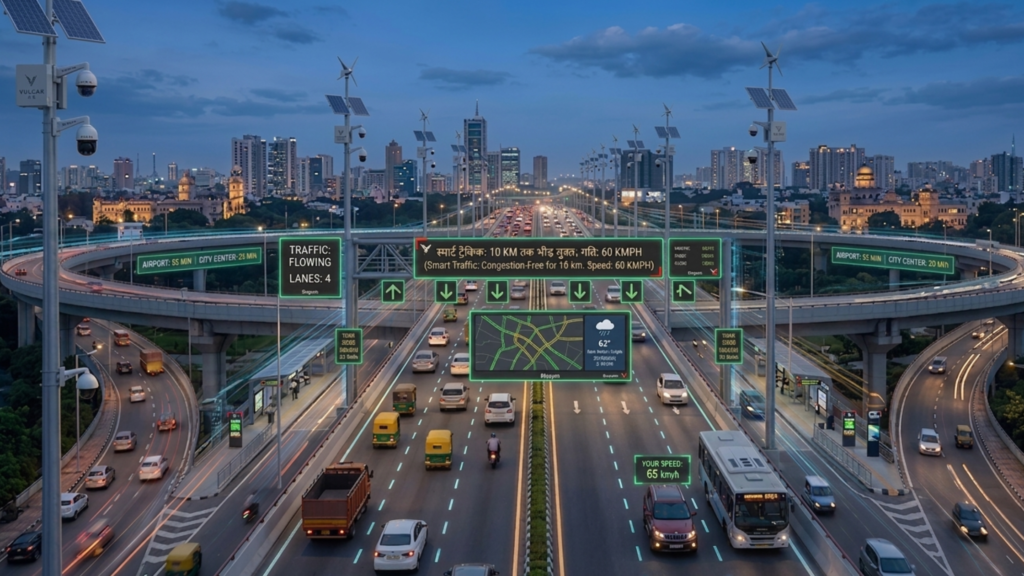
India’s roads are changing rapidly.
With growing urbanization, increasing vehicle numbers, and expanding highway networks, managing traffic efficiently has become more complex than ever. Traditional traffic systems are no longer enough to handle modern mobility challenges.
This is where Intelligent Transport Systems (ITS) are shaping the future.
The future of intelligent transport systems in India is not just about technology – it’s about creating safer, smarter, and more connected roads for everyday life.
What Are Intelligent Transport Systems (ITS)?
Intelligent Transport Systems combine technology, data, and communication to improve how transportation networks function.
They include:
- Smart traffic signals
- Real-time display systems
- Traffic monitoring solutions
- Data-driven control systems
Instead of fixed and reactive systems, ITS makes roads adaptive and responsive.
Why India Needs Intelligent Transport Systems
India faces unique traffic challenges:
- High vehicle density
- Mixed traffic conditions
- Rapid urban expansion
- Increasing accident rates
Traditional systems often struggle to manage these conditions effectively.
ITS helps by:
- Reducing congestion
- Improving traffic flow
- Enhancing road safety
- Supporting better infrastructure planning
Key Technologies Driving the Future
The future of intelligent transport systems in India is powered by several emerging technologies.
1. AI-Based Traffic Control
Artificial intelligence enables systems to analyze real-time traffic and adjust signals dynamically.
This reduces waiting time and improves overall flow.
2. Smart Display Systems
Digital displays such as Variable Message Signs (VMS) provide real-time information to drivers.
They:
- Warn about accidents
- Guide traffic during diversions
- Improve driver awareness
3. Vehicle Actuated Systems
Technologies like speed display systems respond directly to vehicle behavior.
They:
- Detect speed
- Provide instant feedback
- Encourage safer driving
4. Integrated Monitoring Systems
Cameras and sensors collect continuous data from roads.
This helps:
- Detect congestion
- Monitor traffic patterns
- Improve decision-making
5. Solar-Powered Infrastructure
Energy-efficient systems are becoming an important part of ITS.
Solar-powered solutions ensure:
- Continuous operation
- Reduced energy costs
- Sustainable infrastructure
Role of ITS in Smart Cities
Smart cities rely heavily on intelligent transport systems.
ITS supports:
- Seamless mobility
- Reduced travel time
- Better public transport integration
It connects different parts of the city into a coordinated system where traffic flows more efficiently.
Improving Road Safety Through ITS
One of the biggest benefits of ITS is improved safety.
These systems:
- Provide real-time alerts
- Reduce human error
- Guide drivers in critical situations
From tunnel signage to highway displays, every element contributes to safer roads.
At Vulcan Advance Intelligence Computing Pvt. Ltd., intelligent display and traffic solutions are designed with this goal—ensuring that communication on roads is clear, timely, and reliable.
Challenges in Implementation
While the future looks promising, there are challenges:
- High initial investment
- Infrastructure integration
- Maintenance and scalability
- Need for skilled management
However, with growing government focus and private sector innovation, these challenges are gradually being addressed.
The Road Ahead
The future of intelligent transport systems in India is moving toward full integration.
Upcoming developments include:
- Connected vehicle systems
- Real-time data sharing across networks
- Predictive traffic management
- Fully automated control systems
Roads will no longer just carry traffic – they will actively manage it.
How Infrastructure is Evolving
Infrastructure is shifting from static to intelligent.
Earlier:
- Fixed signals
- Static signboards
- Manual monitoring
Now:
- Adaptive systems
- Real-time displays
- Data-driven decisions
Organizations like Vulcan AIC are contributing to this transformation by developing intelligent systems that combine display technology, traffic control, and real-time communication.
Conclusion
The future of intelligent transport systems in India is already taking shape. What once seemed like advanced technology is becoming part of everyday infrastructure. These systems are not just improving traffic – they are improving how people experience roads.
From reducing congestion to enhancing safety, ITS is building a foundation for smarter mobility. As India continues to grow, intelligent transport systems will play a key role in creating roads that are not only efficient – but truly intelligent.

