
Have you ever wondered why traffic always seems to stop when you’re already running late?
Whether you’re heading to work, catching a flight, attending an important meeting, or picking up your children from school, getting stuck in traffic can be frustrating. Understanding the main traffic congestion causes can help us see why these delays happen and what can be done to improve traffic flow.
Modern cities are growing rapidly. More vehicles, increased urbanization, and aging infrastructure are placing tremendous pressure on transportation networks. As a result, traffic congestion has become a daily challenge for millions of commuters.
What Is Traffic Congestion?
Traffic congestion occurs when the number of vehicles on a road exceeds its capacity. When too many vehicles try to use the same road space at the same time, traffic slows down or stops completely.
Traffic congestion affects productivity, fuel consumption, travel times, and road safety. It also creates stress for commuters and increases operational challenges for cities.
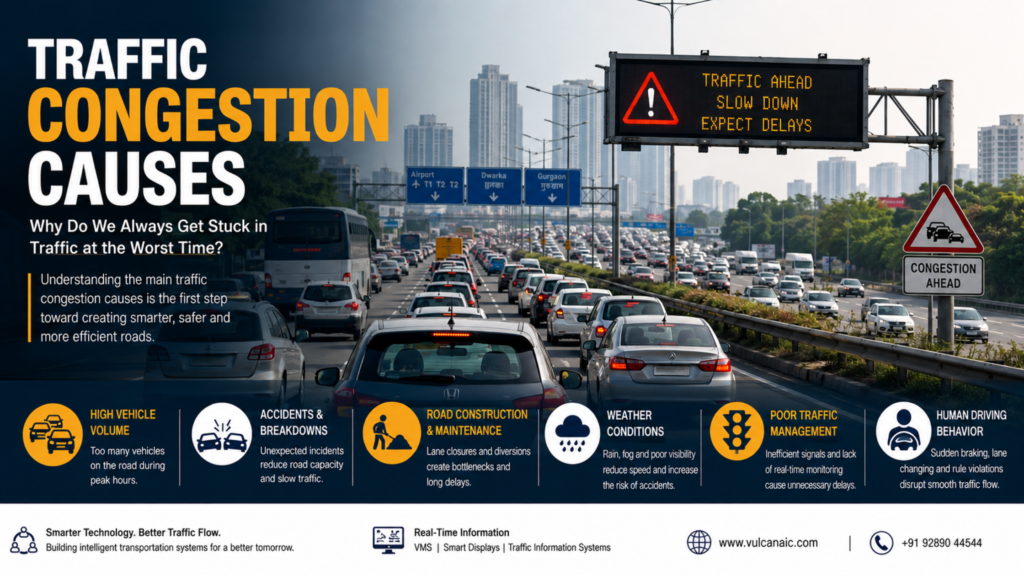
1. High Vehicle Volume Is One of the Biggest Traffic Congestion Causes
One of the primary traffic congestion causes is simply having too many vehicles on the road. As cities expand, vehicle ownership continues to increase. During morning and evening rush hours, thousands of vehicles travel simultaneously, creating heavy demand on highways, intersections, and urban roads.
When road capacity is exceeded, congestion becomes unavoidable.
2. Accidents and Breakdowns Create Instant Delays
Even minor accidents can cause significant traffic disruptions. When a vehicle blocks a lane, surrounding drivers slow down to assess the situation. Emergency services may also need access to the affected area.
Vehicle breakdowns have a similar impact. A single disabled vehicle on a busy highway can create long queues that take hours to clear. This is one of the most common traffic congestion causes in urban areas.
3. Road Construction and Maintenance Activities
Infrastructure development is necessary, but construction projects often reduce available road space. Temporary lane closures, diversions, and restricted access points can create bottlenecks that slow traffic movement.
Although these projects improve transportation infrastructure in the long term, they often contribute to short-term congestion.
4. Poor Driving Habits Affect Traffic Flow
Driver behavior plays a bigger role than many people realize.
Frequent lane changes, distracted driving, sudden braking, and failure to follow traffic rules can reduce traffic efficiency. These actions force surrounding drivers to react, creating ripple effects that slow traffic flow.
Improving driving discipline can significantly reduce some traffic congestion causes.
5. Weather Conditions Impact Road Performance
Weather is another important factor.
Heavy rain, fog, storms, and poor visibility cause drivers to reduce speed for safety reasons. Wet roads increase braking distances and can lead to more accidents. During severe weather conditions, traffic movement often becomes slower and less predictable.
Weather-related disruptions remain one of the key traffic congestion causes worldwide.
6. Inefficient Traffic Signal Management
Poorly synchronized traffic signals can create unnecessary delays.
When traffic lights are not optimized for actual traffic conditions, vehicles spend more time waiting at intersections. Smart traffic signal systems can adapt to real-time traffic volume and improve traffic flow across urban road networks.
7. Lack of Real-Time Traffic Information
Drivers often enter congested areas without knowing about accidents, construction work, lane closures, or road hazards ahead. Without timely information, traffic continues to build.
Real-time communication systems help drivers make informed decisions and choose alternative routes before congestion becomes severe.
How Driver Behavior Contributes to Traffic Congestion Causes
Many traffic jams begin with simple human actions.
For example, sudden braking can create a chain reaction. One vehicle slows down, the next vehicle brakes harder, and the effect spreads backward through traffic. Traffic experts often call these “phantom traffic jams” because they occur without any visible obstacle.
Smooth driving habits and proper lane discipline can reduce these unnecessary delays.
Why Smart Traffic Management Matters
As cities continue to grow, traditional traffic management methods are becoming less effective.
Modern transportation systems require:
- Real-time traffic monitoring
- Intelligent traffic control
- Digital communication systems
- Data-driven decision making
- Automated incident detection
These technologies help authorities respond faster and improve overall traffic efficiency.
How Technology Can Reduce Traffic Congestion Causes
Technology is transforming transportation networks around the world.
Solutions such as:
- Variable Message Signs (VMS)
- Smart LED Display Systems
- Intelligent Transportation Systems (ITS)
- Traffic Monitoring Platforms
- Real-Time Traffic Information Displays
help road authorities communicate important updates directly to drivers.
These systems improve awareness, reduce uncertainty, and support safer driving decisions.
The Role of Smart Infrastructure in Traffic Management
Smart infrastructure allows transportation agencies to monitor road conditions continuously. By collecting and analyzing traffic data, authorities can identify congestion patterns, predict traffic conditions, and implement proactive traffic management strategies.
This approach helps improve mobility while reducing delays and operational inefficiencies.
Building Smarter Transportation Networks
The future of transportation depends on intelligent infrastructure and connected technologies. Understanding the major traffic congestion causes is the first step toward creating safer and more efficient road networks. At VULCAN AIC, we support the development of smarter transportation systems through advanced display technologies, Variable Message Signs (VMS), intelligent communication systems, and smart infrastructure solutions.
By delivering real-time information to road users, these technologies help improve traffic flow, enhance road safety, and support more efficient mobility across highways, tunnels, smart cities, and transportation networks.
As cities continue to evolve, intelligent traffic management will play a critical role in building the future of mobility.

