
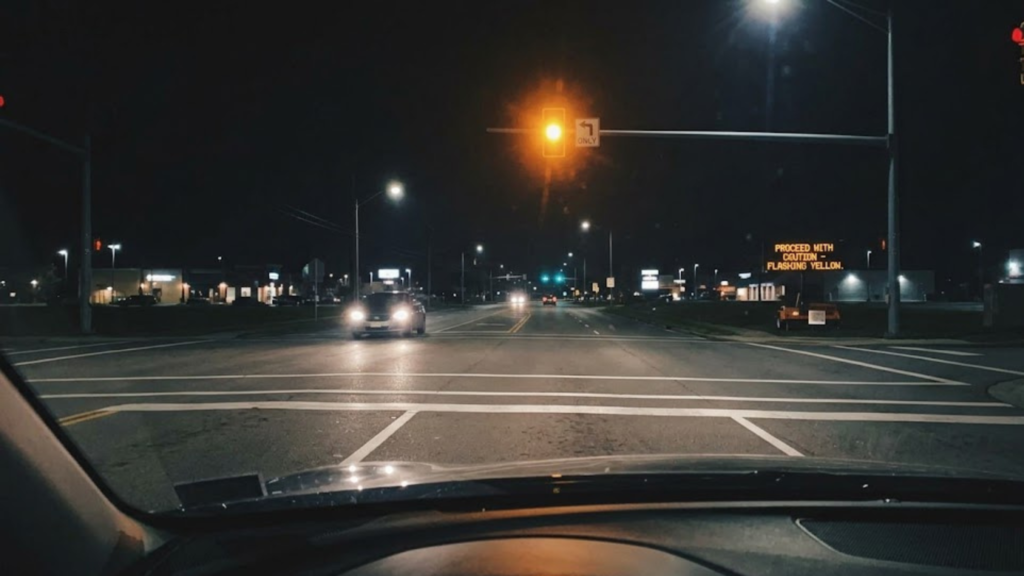
You’re driving late at night. The roads are quieter than usual, and as you approach an intersection, something feels different. Instead of the regular red–yellow–green cycle, you see a blinking yellow light. For a moment, you slow down and wonder what it actually means.
Do you stop? Do you keep going? Is the signal working properly?
This is something many drivers experience, yet not everyone clearly understands. The blinking yellow light is not a malfunction-it is a purposeful signal designed to guide your behavior in a specific way.
Understanding the Meaning
A blinking yellow light, also known as a flashing amber signal, simply means: proceed with caution. It does not require you to stop completely. At the same time, it does not give you full priority to move freely.
Instead, it tells you to:
- Slow down
- Stay alert
- Observe the road carefully
- Move only when it is safe
It shifts responsibility from the signal to the driver, asking you to make a decision based on real conditions.
Why Blinking Yellow Lights Are Used
Traffic signals are not always required to operate in full mode, especially when traffic is low. During late-night hours or in less busy areas, stopping vehicles at empty intersections can create unnecessary delays. It can also lead to frustration and inefficient movement.
Blinking yellow lights solve this problem by allowing traffic to continue moving while still maintaining safety. They remove rigid control but keep drivers cautious.
This makes them especially useful in situations where traffic flow is irregular or unpredictable.
Where You Usually See Them
Blinking yellow lights are commonly used in areas where caution is needed but strict stopping is not necessary.
You will often notice them:
- At intersections during late-night or early morning hours
- On roads with low traffic volume
- Near construction zones or temporary diversions
- At crossings where visibility may be limited
In these situations, traffic conditions can change quickly, and a flexible signal works better than a fixed one.
Common Mistakes Drivers Make
One of the biggest challenges with blinking yellow lights is how people interpret them. Some drivers treat them like a green signal and continue without slowing down. Others become overly cautious and stop completely, even when it is not required. Both reactions can create confusion and increase the risk of accidents.
The correct approach is balanced. You should slow down, check for other vehicles or pedestrians, and then proceed carefully. It is not about stopping or rushing-it is about awareness.
How Traffic Systems Are Evolving
Traditional traffic systems were mostly fixed. Signals followed set timings and did not adapt to real-world conditions. Today, traffic infrastructure is becoming more responsive.
Modern systems are designed to adjust based on time, traffic flow, and surrounding conditions. Blinking yellow lights are part of this evolution, offering flexibility without compromising safety.
At Vulcan Advance Intelligence Computing Pvt. Ltd., traffic solutions are developed with this approach in mind—where systems are not just functional but adaptive. Signals, displays, and monitoring systems work together to create a more connected and efficient road environment.
More Than Just a Signal
Blinking yellow lights often work alongside other systems on the road.
You may also notice:
- Digital display boards showing warnings or alerts
- Speed display systems that reflect your driving speed
- Monitoring systems that help manage traffic flow
All these elements are part of a larger system designed to guide drivers in real time.
When used together, they reduce confusion, improve awareness, and help traffic move more smoothly.
Why This Small Detail Matters
It’s easy to ignore something as simple as a blinking light. But its role is important.
It helps:
- Reduce unnecessary stopping
- Improve traffic efficiency
- Encourage responsible driving
Unlike strict signals, it relies on the driver’s judgment. This makes it more dynamic and suitable for changing road conditions.
Final Thought
The next time you see a blinking yellow light, take a moment to understand what it is asking you to do. It’s not telling you to stop. It’s not giving you a free pass either. It is simply asking you to be aware.
In a system where not everything can be controlled, small signals like these play a big role in keeping roads safe and efficient. And as road infrastructure continues to evolve, even these simple elements are becoming part of a smarter, more connected driving experience.

