
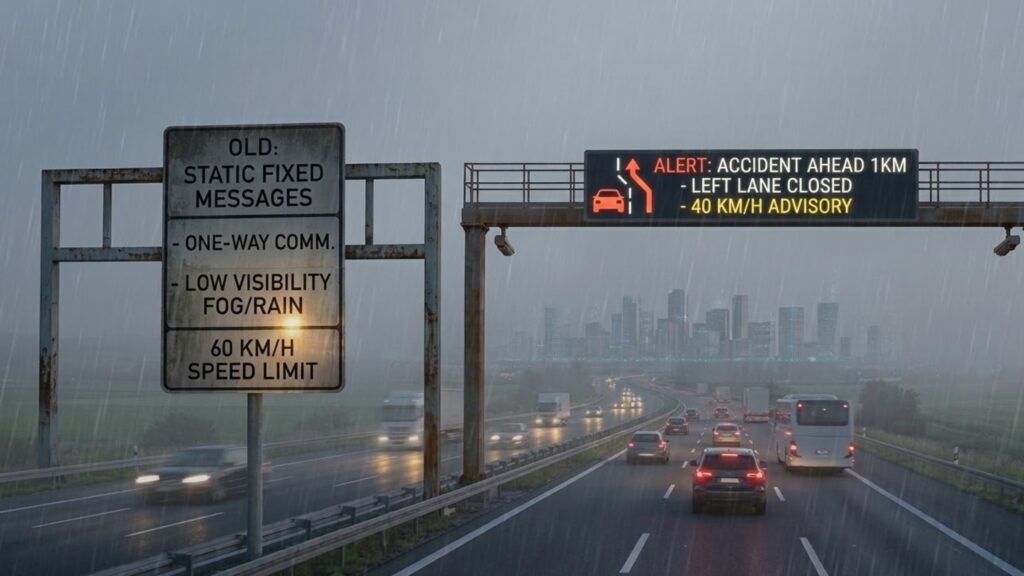
When Highways Start Communicating
Modern highways are no longer just roads designed to move vehicles from one place to another. As traffic volumes increase and cities expand, highways are becoming more intelligent, connected, and responsive. One of the most visible technologies behind this transformation is the LED display system.
From Variable Message Signs (VMS) to lane control signals and smart toll displays, LED technology plays a crucial role in helping highways communicate with drivers in real time.
These displays deliver critical information such as traffic alerts, weather warnings, lane closures, and safety instructions. In doing so, they help create safer roads, smoother traffic flow, and smarter transportation networks.
As part of smart highway infrastructure, LED displays are becoming essential tools in modern traffic management systems.
What Are LED Displays in Highway Infrastructure?
LED displays used in highway infrastructure are high-brightness digital display systems designed to provide clear, real-time information to drivers. Unlike traditional road signs, which display fixed information, LED display systems can change messages instantly depending on traffic conditions.
Common examples include:
- Variable Message Signs (VMS)
- Overhead Lane Signals (OHLS)
- Hybrid User Fare Displays (HUFD) at toll plazas
- Tunnel safety display systems
- Traffic signal displays
These systems are typically integrated with Advanced Traffic Management Systems (ATMS) that monitor traffic conditions and control information displayed on the road.
Why LED Technology Is Ideal for Highways
Highways present a challenging environment for display technology. Displays must remain visible in bright sunlight, heavy rain, fog, dust, and extreme temperatures. LED technology offers several advantages that make it well suited for these conditions.
High Visibility
LED displays produce high-intensity light that remains clearly visible during both daytime and nighttime driving conditions.
Long Lifespan
LED modules are designed to operate continuously for long periods, making them reliable for critical infrastructure applications.
Energy Efficiency
Compared with many other lighting technologies, LEDs consume less power while producing high brightness levels.
Fast Response Time
LED displays can update messages instantly, enabling real-time traffic communication.
Because of these advantages, LED displays have become a key component of smart transportation systems worldwide.
How LED Displays Improve Road Safety
Road safety depends heavily on timely information. Drivers often face situations where hazards are not immediately visible – such as accidents ahead, sudden congestion, or poor weather conditions. LED display systems help address this problem by providing early warnings and dynamic traffic alerts.
For example: A Variable Message Sign might display a warning about fog several kilometers ahead. This allows drivers to slow down gradually instead of reacting suddenly when visibility drops.
These real-time alerts help reduce sudden braking, improve driver awareness, and support safer driving behavior.
LED Displays in Traffic Management Systems
LED displays are usually part of a larger Intelligent Transportation System (ITS). In these systems, traffic data is collected through sensors, cameras, and monitoring platforms. Traffic management software analyzes the data and sends alerts to LED display systems installed along highways.
Examples of information that may appear on these displays include:
- Accident warnings
- Traffic congestion alerts
- Speed advisories
- Lane closures
- Weather conditions
- Diversion instructions
By delivering this information instantly, LED displays help traffic authorities manage road conditions more efficiently.
Supporting Smart Highway Infrastructure
Smart highways rely on technology that allows infrastructure to respond dynamically to changing conditions. LED display systems play a central role in this ecosystem.
They enable highways to:
- Communicate directly with drivers
- Manage traffic flow more efficiently
- Improve incident response times
- Enhance driver awareness
When integrated with traffic monitoring systems and control centers, LED displays become powerful communication tools that help maintain smoother and safer traffic operations.
LED Displays and the Future of Intelligent Transportation
As transportation systems continue evolving, LED display technology will play an even greater role in highway infrastructure. Future smart highway networks may integrate LED displays with:
- AI-based traffic monitoring
- connected vehicle communication systems
- predictive traffic analytics
- smart city mobility platforms
These technologies will allow highways to anticipate traffic conditions and communicate with drivers even more effectively. In this future, roads will not just carry vehicles – they will actively guide and inform them.
Engineering the Technology Behind Smart Roads
While drivers see only the messages displayed on highway screens, the technology behind these systems is complex. Designing reliable LED displays for highway infrastructure requires expertise in electronics, software integration, environmental durability, and traffic communication systems.
Organizations specializing in intelligent transportation technologies work to design and manufacture these systems so they perform reliably under demanding conditions. Among these companies is Vulcan Advance Intelligence Computing Pvt. Ltd. (Vulcan AIC), an Indian OEM focused on intelligent LED display solutions and traffic management technologies.
Through products such as Variable Message Signs, Overhead Lane Signals, and integrated display systems, Vulcan AIC contributes to building smarter highway infrastructure.
Because in modern transportation networks, clear communication can make every journey safer.

