
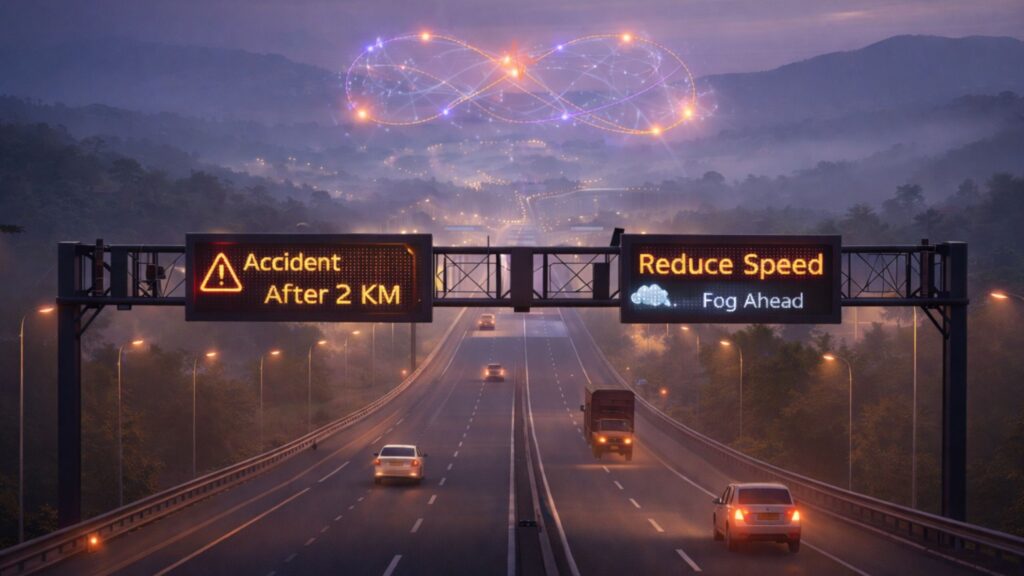
Indian highways connect cities, states, and livelihoods. Every day, millions of people depend on them to reach home safely. Yet, despite better roads and faster vehicles, highway accidents remain a serious concern across the country.
Most accidents do not happen because drivers want to take risks. They happen because information comes too late – a sudden traffic jam, fog ahead, an accident around the curve, or an unexpected lane closure.
This is where AI-enabled traffic display systems are quietly changing the way highways work.
The Core Problem: Roads Don’t Communicate Enough
Traditional highway signboards are static. They show the same message all day, regardless of what is actually happening on the road.
But real roads are dynamic:
- Traffic density changes every minute
- Weather conditions shift suddenly
- Accidents happen without warning
When drivers don’t get timely information, they react late – and late reactions cause accidents.
What Are AI-Enabled Traffic Display Systems?
AI-enabled traffic display systems are smart electronic boards that change messages automatically based on real-time road conditions.
They use:
- Traffic sensors
- Cameras
- Weather data
- Vehicle movement patterns
- AI algorithms that analyse situations instantly
Instead of fixed warnings, these systems decide what message is needed, where it is needed, and when it is needed.
How These Systems Help Prevent Accidents
1. Early Warnings Reduce Sudden Braking
One of the biggest causes of highway accidents is sudden braking. AI systems detect:
- Traffic slowing down ahead
- Accidents or congestion
- Unexpected obstacles
They warn drivers before they reach the danger zone. This extra time helps drivers slow down smoothly instead of reacting in panic.
2. Speed Control Without Force
Over-speeding is common on open highways. AI-enabled displays adjust messages based on:
- Traffic speed trends
- Time of day
- Weather conditions
Messages like:
- “Reduce Speed – Fog Ahead”
- “Heavy Traffic After 1 KM”
encourage drivers to slow down naturally – without enforcement or penalties.
3. Better Visibility in Poor Conditions
Fog, rain, dust, and night driving reduce visibility.
Smart LED displays:
- Adjust brightness automatically
- Use high-contrast colours
- Remain visible from longer distances
This ensures critical messages are seen clearly, even when physical signboards fail.
4. Fewer Human Errors
Manual traffic management depends on:
- Operators
- Phone calls
- Delayed updates
AI systems work continuously, without fatigue.
They:
- Monitor roads 24/7
- Respond instantly
- Reduce dependency on manual intervention
This consistency plays a major role in accident prevention.
5. Learning From Data to Prevent Future Accidents
AI systems don’t just react – they learn.
By analysing:
- Accident-prone zones
- Peak congestion hours
- Past traffic behaviour
Authorities can identify:
- High-risk stretches
- Dangerous patterns
- Areas needing improvement
This allows safety measures to be planned before accidents happen, not after.
Why This Matters for Public Safety in India
Every prevented accident means:
- Lives saved
- Families protected
- Less pressure on hospitals and emergency services
AI-enabled traffic displays turn highways into communicating systems, not silent roads.
They guide drivers calmly, clearly, and at the right moment – which is often the difference between a close call and a tragedy.
India’s Move Toward Intelligent Highways
India is steadily moving toward:
- Intelligent Transport Systems (ITS)
- Smart mobility solutions
- Data-driven road safety
Organizations working in intelligent infrastructure, including Vulcan AIC, are part of this broader shift – helping highways evolve from fixed structures into responsive, learning systems.
The goal is simple: make roads safer, not just faster.
How Vulcan AIC Contributes to Safer Highways
While the idea of intelligent traffic systems is gaining attention, the real impact comes from how these systems are designed and implemented on the ground.
At Vulcan AIC, the focus is on building AI-enabled traffic display systems that work in real Indian highway conditions – not just in theory.
These solutions are designed to:
- Collect real-time traffic and environmental data
- Process information quickly using intelligent logic
- Display clear, readable messages that drivers can understand instantly
- Adapt messages based on traffic flow, weather, and risk levels
- Remain visible and reliable in fog, rain, heat, and night conditions
Instead of overwhelming drivers with too much information, the systems aim to communicate the right message at the right moment.
By combining intelligent display technology, data-driven decision-making, and practical highway experience, Vulcan AIC support highway authorities in reducing confusion, improving response time, and enhancing overall road safety.
The approach is simple but powerful: Intelligent highways are not built overnight – they evolve through thoughtful systems designed to protect lives every day.

