
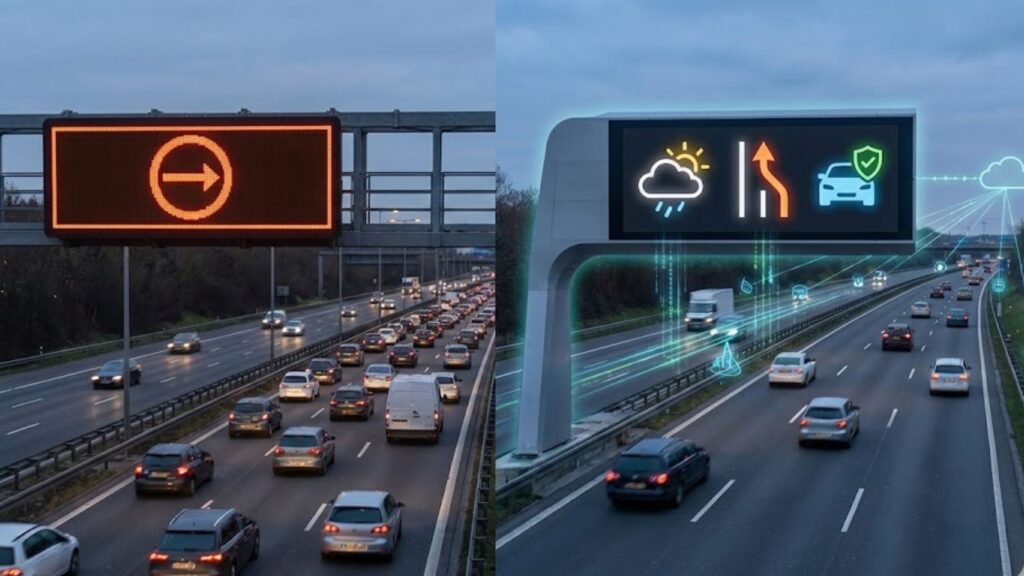
For years, LED signage has been an important part of roads, highways, and public infrastructure. From speed limits to safety warnings, these boards helped guide drivers and manage traffic.
But as traffic volume grows and road conditions change faster than ever, traditional LED signage is no longer enough. Today, infrastructure needs displays that can think, adapt, and respond in real time.
This is where intelligent LED display systems come in.
Let’s clearly understand the difference between the two-and why this shift matters for safety, efficiency, and future-ready infrastructure.
What Is Traditional LED Signage?
Traditional LED signage is static or semi-static.
It usually:
- Displays fixed messages
- Is manually controlled
- Changes content only when someone updates it
- Works independently, without real-time data
Common examples:
- Speed limit boards
- Fixed warning signs
- Time-based message boards
These systems were effective when traffic patterns were predictable. But modern roads are anything but predictable.
What Are Intelligent LED Display Systems?
Intelligent LED display systems are dynamic, data-driven, and responsive.
They are connected to:
- Traffic sensors
- Cameras
- Weather systems
- Control centers
- AI-based decision engines
Instead of just showing information, they process data and decide what to display-automatically.
In simple terms:
Traditional displays show messages.
Intelligent displays decide which message is needed right now.
Key Differences: Traditional vs Intelligent LED Displays
1. Static vs Real-Time Communication
Traditional LED Signage
- Shows the same message regardless of conditions
- Cannot react to sudden changes
Intelligent LED Displays
- Update instantly based on traffic, weather, or incidents
- Warn drivers before they reach danger zones
Result: Faster reaction, fewer accidents.
2. Manual Control vs Automated Decisions
Traditional
- Requires manual updates
- Slower response during emergencies
Intelligent
- Automatically triggered by data
- Works 24/7 without delay
Result: Reduced human error and faster alerts.
3. One-Way Information vs Two-Way Intelligence
Traditional
- No feedback or learning
- No data storage or analysis
Intelligent
- Collects and analyzes traffic data
- Learns from patterns and improves over time
Result: Smarter planning and preventive safety.
4. Visibility vs Clarity
Traditional
- Fixed brightness and contrast
- Poor visibility in fog, rain, or strong sunlight
Intelligent
- Adaptive brightness and contrast
- Optimized for Indian weather conditions
Result: Messages remain readable when they matter most.
5. Reactive vs Preventive Safety
Traditional
- Alerts drivers after problems occur
- Limited role in accident prevention
Intelligent
- Predicts congestion and risks
- Helps prevent accidents before they happen
Result: Proactive safety instead of damage control.
Why Intelligent LED Displays Are Better for Modern Infrastructure
Modern highways are complex systems. They carry:
- High-speed vehicles
- Mixed traffic types
- Heavy freight movement
- Unpredictable weather conditions
Intelligent LED displays help authorities:
- Reduce congestion
- Improve emergency response time
- Enhance driver confidence
- Support data-driven decision-making
They turn roads from silent structures into communicating systems.
Buyer Insight: When Should You Upgrade?
If your infrastructure faces:
- Frequent congestion
- Poor visibility conditions
- High accident rates
- Manual traffic management
- Growing traffic volumes
Then traditional LED signage may no longer be sufficient. Upgrading to intelligent LED display systems is not about technology upgrades alone-it’s about long-term safety, efficiency, and scalability.
The Indian Context: Why Intelligence Matters More Here
Indian roads are unique:
- Mixed vehicle types
- High density
- Rapid urban expansion
- Extreme weather conditions
Intelligent systems designed for Indian conditions perform far better than imported, generic solutions. This is why organizations working in intelligent infrastructure, such as Vulcan AIC, focus on practical, field-tested display systems rather than just specifications on paper.
The goal is simple: clear information, delivered at the right time, in real conditions.
Final Thoughts: From Display to Decision System
The difference between traditional LED signage and intelligent LED displays is not just technical – it’s philosophical.
Traditional signage informs. Intelligent displays protect, guide, and adapt. As infrastructure moves toward smarter, safer, and more human-centric design, intelligent LED display systems are no longer optional. They are becoming the foundation of modern highways and smart cities.
Because when roads communicate better, everyone travels safer.

