
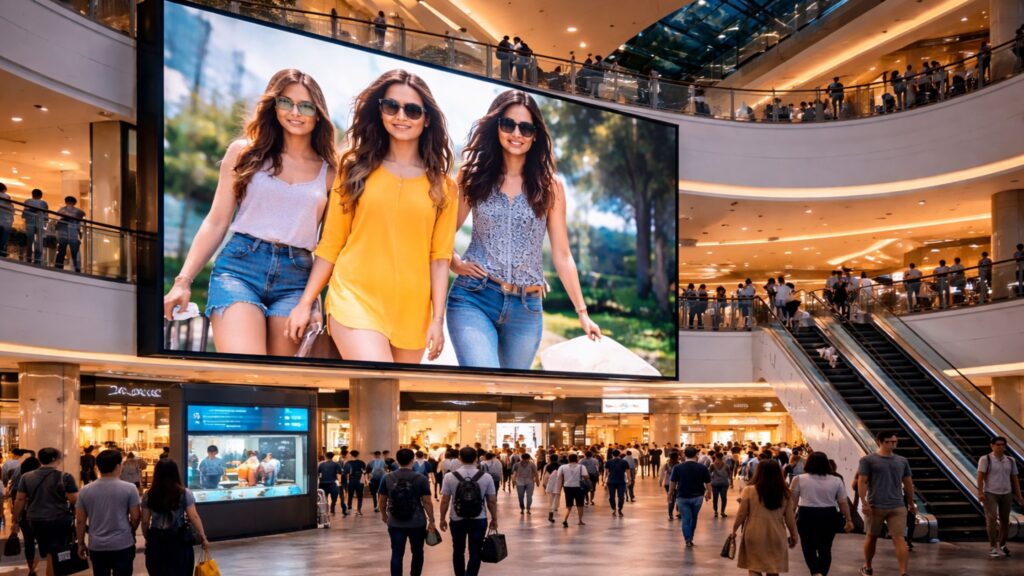
Walk into any modern shopping mall today and you’ll see it – massive LED video walls lighting up atriums, entrances, and retail corridors.
They look impressive.
They attract attention.
They elevate brand perception.
But here’s what most people don’t realize:
Installing a large video wall in a mall is not just about mounting screens on a wall.
It’s a complex engineering project. And when mistakes happen, they become very visible – flickering panels, color mismatches, overheating modules, or even complete system shutdowns during peak hours.
If you’re a mall developer, facility manager, or brand investing in large-format displays, understanding these common mistakes can save you time, money, and long-term performance issues.
1. Ignoring Viewing Distance and Pixel Pitch
One of the most common technical mistakes is choosing the wrong pixel pitch.
Pixel pitch determines how clear the image looks at a specific viewing distance.
- Too large a pitch in a close-view environment → visible pixel gaps
- Too small a pitch for long-distance viewing → unnecessary cost
Mall environments vary:
- Atriums have long viewing distances
- Storefront displays are viewed up close
Choosing the wrong configuration leads to poor visual experience and wasted investment.
2. Underestimating Structural Support Requirements
Large video walls are heavy.
Many installations fail because:
- Wall structures are not load-tested
- Mounting frames lack proper reinforcement
- Alignment brackets are poorly calibrated
In malls with high footfall, vibration from escalators and constant movement can cause slight shifts over time – leading to panel misalignment.
A video wall must be structurally engineered, not just installed.
3. Poor Heat Dissipation Planning
Malls operate 12–16 hours daily. During weekends and festive seasons, displays run continuously.
LED modules generate heat.
If ventilation is inadequate:
- Panels overheat
- Color consistency drops
- Lifespan reduces
- Unexpected shutdowns occur
Heat pockets behind large walls are one of the biggest silent threats to performance.
Thermal planning should never be an afterthought.
4. Weak Power Infrastructure
Large-format LED walls consume significant power.
Common errors include:
- No dedicated power lines
- Inconsistent voltage regulation
- Absence of surge protection
- Improper earthing
Power fluctuations in commercial buildings can damage control cards and drivers.
When power design is weak, even the best display hardware struggles.
5. Inadequate Network and CMS Planning
Modern mall video walls don’t just display one static advertisement.
They run:
- Scheduled brand campaigns
- Event promotions
- Live streams
- Interactive content
Without proper network bandwidth and centralized CMS architecture:
- Content lags
- Screens freeze
- Synchronization fails
Large video walls often require synchronized playback across multiple panels. That demands a stable backend system.
6. Overlooking Ambient Light Conditions
Mall environments are full of:
- Glass facades
- Natural daylight
- Reflective flooring
- Bright retail lighting
If brightness levels are not properly calculated:
- The screen may look dull in daylight
- Or excessively bright at night
Brightness calibration should match ambient lighting conditions to maintain clarity and comfort.
7. Choosing Low-Grade Components to Cut Costs
Budget shortcuts may reduce upfront cost, but they increase long-term risk.
Low-quality components often result in:
- Uneven color reproduction
- Dead pixels
- Panel banding
- Frequent maintenance
Large mall displays are high-visibility assets. Performance inconsistency damages brand perception instantly.
8. Skipping Preventive Maintenance Planning
Many installations focus only on setup – not long-term serviceability.
Questions often ignored:
- Is there front access for repairs?
- Can individual modules be replaced easily?
- Is there a preventive maintenance schedule?
A well-designed video wall must allow easy access for servicing without dismantling the entire structure.
Why These Mistakes Matter
Mall video walls are not just advertising tools.
They:
- Influence brand image
- Drive footfall
- Generate advertising revenue
- Enhance customer experience
A malfunctioning screen doesn’t just look bad. It signals poor infrastructure planning.
In competitive retail environments, perception directly impacts business.
The Real Solution: Engineering Before Installation
Installing a large video wall in a mall requires more than selecting a high-resolution panel.
It demands:
✔ Accurate pixel pitch analysis
✔ Structural load assessment
✔ Dedicated and stabilized power systems
✔ Advanced thermal management
✔ Network bandwidth planning
✔ Centralized CMS integration
✔ Professional calibration
✔ Scheduled preventive maintenance
The difference between a visually impressive display and a truly reliable one lies in system-level engineering.
Across India’s expanding retail infrastructure, there is a growing understanding that large-format displays must be treated as long-term digital assets – not decorative add-ons.
Behind every seamless mall video wall is disciplined planning, integration expertise, and performance-focused design.
At Vulcan AIC, we believe that large-scale visual environments should combine aesthetics with engineering precision. Our focus goes beyond brightness and size – we prioritize structural balance, backend stability, thermal science, and operational continuity.
Because in high-footfall spaces like malls, your display system isn’t just seen.
It represents your brand. And when designed correctly, it performs consistently – even during the busiest weekends of the year.

