
Why the Right ATMS Partner Matters
Modern highways are no longer just roads connecting cities. They are increasingly becoming intelligent networks designed to manage traffic, improve safety, and deliver real-time information to drivers.
This transformation is powered by Advanced Traffic Management Systems (ATMS) – integrated platforms that combine technologies like Variable Message Signs (VMS), traffic monitoring cameras, lane control signals, and data analytics.
But building a smart highway ecosystem requires more than installing equipment. It requires choosing the right technology partner. Selecting an ATMS partner is a long-term infrastructure decision. A system deployed today may operate for 10–15 years or more. If the technology fails, integration becomes difficult, or support is lacking, the entire traffic management network can suffer.
Understanding common mistakes in partner selection can help infrastructure authorities, project developers, and engineering consultants make better decisions.
What Is an Advanced Traffic Management System (ATMS)?
An Advanced Traffic Management System (ATMS) is a technology framework used to monitor and control traffic conditions across highways, tunnels, and urban road networks.
ATMS platforms integrate multiple systems such as:
- Variable Message Signs (VMS)
- Overhead Lane Signals (OHLS)
- Traffic monitoring cameras
- Traffic lights and control systems
- Incident detection technologies
- Centralized traffic management software
Together, these components allow traffic authorities to observe road conditions in real time and communicate directly with drivers. When implemented properly, ATMS improves traffic flow, reduces congestion, and enhances road safety.
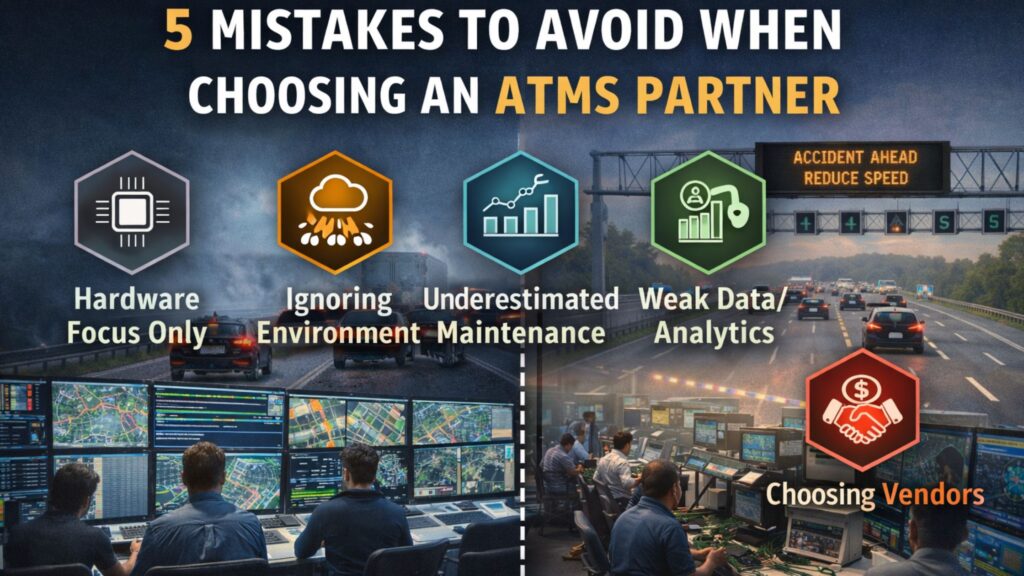
Mistake 1: Choosing Hardware Without Considering Integration
One of the most common mistakes in ATMS projects is focusing only on hardware specifications. Highway infrastructure often involves multiple technologies from different vendors – displays, sensors, cameras, communication networks, and software platforms. If these systems cannot communicate with each other, the entire ATMS platform becomes fragmented.
A strong ATMS partner designs solutions with system integration in mind, ensuring that devices and software operate as part of a unified network rather than isolated components.
Integration is what allows traffic alerts, lane signals, and monitoring systems to work together in real time.
Mistake 2: Ignoring Local Environmental Conditions
Traffic systems deployed on highways must operate reliably in difficult environments. In India, infrastructure faces a wide range of environmental challenges:
- Summer temperatures above 50°C
- Heavy monsoon rainfall
- Dust and pollution
- Coastal humidity
- Dense winter fog
Choosing technology that is not designed for these conditions can lead to frequent failures, visibility problems, and higher maintenance costs. An experienced ATMS partner understands these realities and designs systems specifically for the environments where they will operate.
Mistake 3: Underestimating Long-Term Maintenance
Installing intelligent traffic systems is only the beginning. These systems must remain operational for years while exposed to weather, dust, vibrations, and continuous electrical use. Without proper maintenance planning, small technical issues can quickly turn into major operational disruptions.
A reliable ATMS partner provides:
- structured maintenance support
- remote monitoring capabilities
- replacement part availability
- long-term service plans
Infrastructure projects should always evaluate lifecycle support, not just installation costs.
Mistake 4: Overlooking Data and Software Capabilities
Modern traffic management is driven by data. An ATMS platform must be capable of collecting, analyzing, and responding to traffic data in real time.
This includes:
- traffic density analysis
- incident detection
- congestion prediction
- dynamic traffic alerts
If the system lacks robust software capabilities, the infrastructure may function only as a display network rather than a true traffic management system.
Choosing a partner that understands data-driven traffic control is essential for building truly intelligent highways.
Mistake 5: Selecting Vendors Instead of Technology Partners
Another common mistake is choosing suppliers based purely on cost or individual product offerings. While vendors provide equipment, infrastructure projects require partners who can support long-term system development.
A technology partner contributes:
- engineering expertise
- system architecture design
- integration knowledge
- long-term support
- infrastructure scalability
The goal is not just installing technology today but ensuring the system remains effective as traffic networks evolve.
The Future of ATMS in Smart Infrastructure
As transportation networks grow, the role of ATMS will continue expanding.
Future systems will integrate:
- artificial intelligence for traffic prediction
- connected vehicle communication
- automated incident detection
- real-time data sharing across city networks
Smart highways will become part of broader intelligent mobility ecosystems, connecting expressways, urban roads, and smart city infrastructure. Choosing the right technology partner today helps ensure these systems can evolve with future requirements.
Building Intelligent Traffic Systems for Safer Roads
Across modern transportation networks, ATMS platforms are becoming essential infrastructure. They help authorities manage traffic efficiently while providing drivers with critical real-time information. Behind these systems are engineering teams designing technologies that allow roads to communicate more clearly with the people using them.
Among the companies working in this space is Vulcan Advance Intelligence Computing Pvt. Ltd. (Vulcan AIC), an Indian OEM focused on developing intelligent display systems and traffic technologies for smart highway infrastructure. Through solutions such as Variable Message Signs, Overhead Lane Signals, and integrated traffic management systems, Vulcan AIC contributes to building transportation networks that are safer, smarter, and more responsive.
Because modern roads do more than carry traffic – they guide it.

