
Let’s start with something honest.
Most road accidents don’t happen because people wake up intending to be reckless.
They happen because someone was tired.
Someone reacted late.
Someone misjudged speed.
Someone didn’t see what was ahead in time.
Human error is rarely dramatic. It’s usually small. Ordinary. Almost invisible – until it isn’t. And in a country like India, where highways carry millions of vehicles every day, those small human mistakes can turn into very big consequences.
So the real question is:
Can technology actually reduce human error on roads? Or are we expecting too much from machines?
Let’s talk about it – realistically.
Over-Speeding: The Quiet Habit
Over-speeding is one of the most common causes behind road accident statistics in India. But here’s the thing – most drivers don’t think they’re over-speeding.
They think:
- “The road is clear.”
- “I know this route.”
- “Just a little faster.”
Highways are smoother now. Expressways are wider. Vehicles are more powerful. Speed creeps up without people noticing. Technology can’t replace judgement. But it can influence behaviour. When drivers see digital speed warnings, live traffic alerts, or variable speed limit updates ahead, something shifts psychologically.
The message acts like a reminder.
And reminders, when timed correctly, change behaviour.
Late Reaction: The Real Danger
Driving at 100 km/h means covering almost 28 meters per second. Now imagine this scenario:
Traffic ahead suddenly slows down.
You notice it two seconds late.
That’s 56 meters already gone.
Reaction time is one of the biggest hidden contributors to accidents. It’s not about bad driving – it’s about delayed awareness. This is where smart traffic management systems begin to matter.
When highways use real-time alerts to warn drivers about congestion, diversions, or accidents ahead – the surprise element disappears.
You don’t brake suddenly.
You adjust gradually.
Technology doesn’t drive for you.
It simply tells you earlier.
And earlier is everything.
Fatigue: The Mistake No One Talks About
Long-distance drivers know this well.
Night highways.
Endless straight stretches.
Heavy eyes.
Reduced alertness.
Fatigue slows reaction time. It reduces judgement. It narrows peripheral vision. No driver willingly chooses to be tired. But highways are long, and journeys are demanding. Bright, clear digital alerts act like wake-up triggers.
They cut through monotony.
They re-engage attention.
They create a moment of focus.
It may seem small, but that visual interruption can break a dangerous mental drift. Sometimes, safety is simply about keeping drivers mentally present.
What Road Accident Statistics in India Really Tell Us
When we look at road accident statistics in India, numbers often dominate headlines. But behind every statistic is a chain of small events.
A little too fast.
A little too distracted.
A little too late.
Human error is not a character flaw. It’s a limitation. And smart infrastructure exists to support human limitations – not to judge them.
Smart Traffic Management Is Not About Control – It’s About Support
There’s a misconception that smart traffic management is about surveillance or strict enforcement. In reality, it’s about communication.
Modern highways can now:
- Update drivers about weather conditions in real time
- Warn about fog-prone zones
- Display speed advisories
- Inform about accidents or diversions instantly
The goal is simple:
Reduce uncertainty.
When drivers know what’s coming, they behave differently.
Less panic.
Less sudden braking.
Less aggressive reactions.
Technology doesn’t remove responsibility.
It strengthens informed decision-making.
But Can Technology Eliminate Human Error Completely?
No. And it shouldn’t try to.
Driving will always involve human judgement. Human emotion, Human distraction, But what technology can do is reduce the impact of those errors.
It creates a buffer. It adds extra seconds of awareness. It fills information gaps. Think of it this way: If human error causes a spark, smart systems can prevent it from becoming a fire.
The Balance We Need
India’s highways are expanding rapidly. Infrastructure is improving. Expressways are connecting cities faster than ever before. But speed without communication increases risk.
True highway safety in India will come from balance:
Better roads.
Responsible drivers.
And intelligent communication systems working quietly in the background.
Because the safest journeys are the ones where drivers feel informed, not surprised.
Where Vulcan AIC Fits Into This Conversation
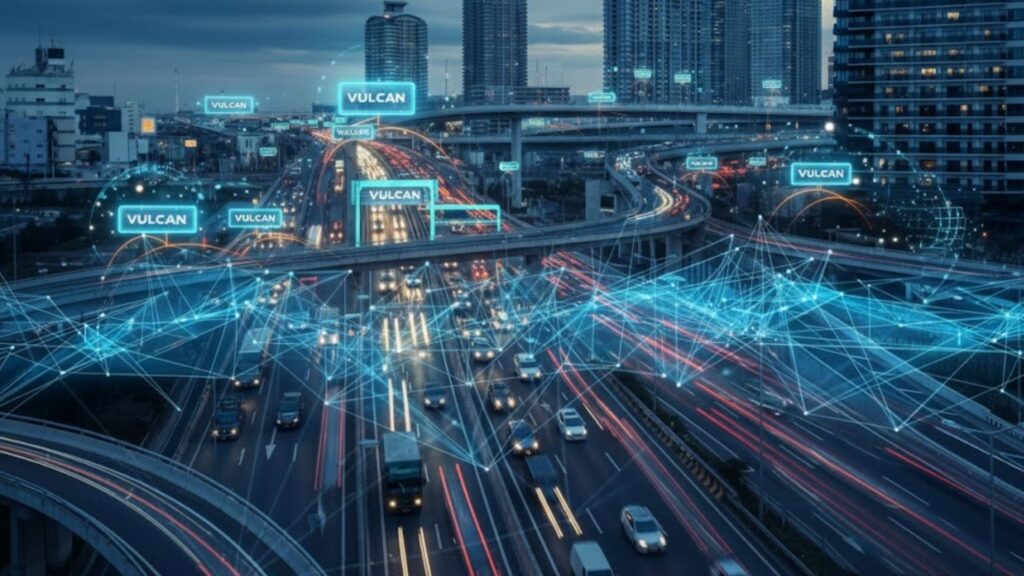
At Vulcan AIC, this balance is something we think about constantly. We don’t see technology as a replacement for human drivers. We see it as a partner.
Our Variable Message Signs and intelligent display systems are designed to deliver clear, real-time information when it matters most – whether it’s a speed advisory, fog warning, accident alert, or traffic update.
Across multiple Indian states, these systems help reduce uncertainty on highways. Not by controlling drivers. But by informing them earlier. Because when drivers receive the right message at the right time, human error becomes less dangerous.
And on Indian roads, that difference matters more than ever.

