
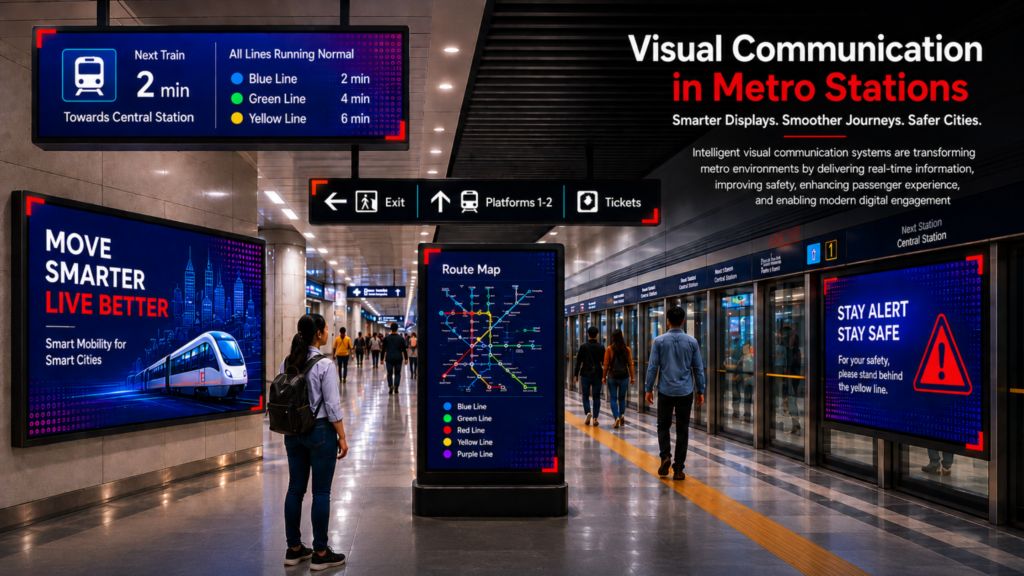
Modern metro systems are no longer just about transportation. They are about creating smooth, connected, and intelligent passenger experiences for millions of people moving through cities every single day. As urban mobility continues growing rapidly, metro stations are becoming more crowded, more dynamic, and more dependent on instant communication than ever before.
This is exactly why visual communication in metro stations is becoming essential.
From real-time updates and passenger guidance to safety alerts and digital advertising, intelligent visual communication systems are transforming how metro infrastructure functions in modern cities. Today, people expect information instantly. And in fast-moving environments like metro stations, communication needs to be visible, immediate, and easy to understand.
Why Visual Communication in Metro Stations Matters Today
Every day, thousands of passengers move through metro stations within very limited timeframes.
People are:
- Catching trains quickly
- Changing platforms
- Looking for directions
- Managing schedules
- Responding to announcements
In such fast-moving environments, traditional communication methods alone are no longer enough. Passengers cannot rely only on audio announcements. Visual communication in metro stations helps ensure that information remains clear, accessible, and continuously visible to everyone inside the station environment. This improves both efficiency and passenger experience.
Real-Time Information Matters More Than Ever
One of the biggest reasons visual communication systems are becoming essential is the need for real-time information.
Modern passengers expect immediate updates regarding:
- Metro arrival timings
- Platform changes
- Route guidance
- Delays and disruptions
- Safety notifications
Without proper communication systems, confusion increases quickly inside crowded transit environments. Intelligent LED display systems help solve this problem by delivering information instantly and clearly across multiple station areas. Passengers no longer need to depend entirely on verbal announcements.
Visual displays provide continuous visibility and faster understanding.
How Visual Communication in Metro Stations Improves Passenger Experience
Visual communication in metro stations is not only about information. It is also about improving how passengers experience public transportation spaces.
A well-designed communication system helps create environments that feel:
- More organized
- Easier to navigate
- Less stressful
- More connected
- More modern
This becomes especially important during peak hours when stations are highly crowded. Large digital displays and intelligent information systems help passengers make decisions faster and move more smoothly through transit environments.
Even small communication improvements can significantly enhance commuter experiences. Organizations like Delhi Metro Rail Corporation continue demonstrating how modern metro systems rely on efficient communication and passenger information technologies.
Role of LED Displays in Visual Communication in Metro Stations
LED display systems are becoming one of the most important parts of modern metro infrastructure.
Their high visibility, brightness, and flexibility make them ideal for busy transportation environments where information must remain visible under different lighting conditions and heavy passenger movement.
Today, LED displays are used for:
- Passenger information systems
- Platform displays
- Directional guidance
- Emergency communication
- Digital advertising
- Route information
- Public awareness messaging
These systems allow metro stations to communicate instantly with thousands of commuters simultaneously.
At Vulcan Advance Intelligence Computing Pvt. Ltd., intelligent LED display systems are designed to support modern infrastructure environments through reliable, high-visibility communication technologies engineered for real-world performance.
Why Visual Communication Improves Safety
Safety is one of the most important aspects of metro infrastructure. In crowded public transportation environments, communication delays can create confusion and operational challenges very quickly. This is why visual communication in metro stations plays a major role in improving safety.
Real-time display systems help communicate:
- Emergency alerts
- Restricted areas
- Platform changes
- Crowd management instructions
- Safety notifications
Passengers can immediately understand instructions visually without depending entirely on audio communication. This becomes extremely important in noisy or crowded environments where announcements may not always be heard clearly.
Visual communication improves response speed and helps reduce confusion during critical situations.
Digital Advertising Is Changing Metro Environments
Another major transformation happening inside metro stations is digital advertising. Earlier, metro advertising depended heavily on static posters and printed banners. But today, intelligent digital displays are creating far more engaging advertising experiences.
Large LED screens and digital video walls help brands create:
- Dynamic campaigns
- Motion-based visuals
- Real-time content updates
- High-visibility advertising experiences
This not only improves advertising effectiveness but also makes metro spaces feel more modern and visually connected. Passengers naturally engage more with moving and visually immersive content compared to static communication.
This is why visual communication in metro stations is also becoming an important part of modern urban advertising ecosystems. Intelligent LED technologies are becoming central to Visual Communication in Metro Stations because they provide high visibility and real-time communication capabilities.
Why Modern Metro Stations Feel More Premium
Have you ever noticed that some metro stations instantly feel more advanced and premium than others?
One major reason is visual communication quality.
Clean display systems, intelligent guidance screens, synchronized communication, and digital infrastructure create environments that feel:
- Smarter
- More organized
- Easier to navigate
- More technologically advanced
Passengers may not consciously notice every display system around them, but they experience the difference subconsciously. Good communication improves comfort. And comfort improves public experience.
Smart Cities Need Intelligent Communication Systems
As India continues developing smarter cities and connected transportation ecosystems, metro infrastructure is also evolving rapidly.
Future-ready transportation systems depend heavily on:
- Real-time data
- Connected infrastructure
- Intelligent communication
- Adaptive systems
- Smart mobility networks
Visual communication systems are becoming central to this transformation. Smart metro infrastructure requires communication technologies capable of supporting millions of daily interactions efficiently and reliably.
We, Vulcan AIC are contributing to this evolution through intelligent display technologies designed for transportation, public infrastructure, and modern mobility environments. Modern infrastructure trends clearly show that Visual Communication in Metro Stations will continue shaping the future of intelligent urban mobility systems.
The Future of Visual Communication in Metro Stations
The future of metro communication systems will become even more intelligent and interactive.
Upcoming developments may include:
- AI-driven information systems
- Adaptive passenger communication
- Smart route guidance
- Real-time crowd management displays
- Interactive public communication systems
Metro stations will increasingly function as connected digital environments where communication happens instantly and seamlessly. Visual communication will no longer be considered an additional feature. It will become essential infrastructure.
Why Visibility Is the Future of Mobility
Modern transportation systems are becoming more connected every year. But connectivity alone is not enough.
People need information that is:
- Instant
- Visible
- Reliable
- Easy to understand
As cities continue developing smarter mobility ecosystems, Visual Communication in Metro Stations will remain essential for safer, faster, and more connected passenger experiences.
Whether through passenger guidance systems, safety communication, intelligent displays, or digital advertising, visual technology is helping cities create better public transportation experiences for millions of daily commuters.
At Vulcan Advance Intelligence Computing Pvt. Ltd., intelligent display systems are engineered to support this future – building smarter, more connected, and visually intelligent infrastructure environments for modern mobility networks.
Because in the future of transportation, communication will matter just as much as connectivity.
Frequently Asked Questions
Why is visual communication important in metro stations?
Visual communication helps passengers receive real-time information quickly and clearly, improving navigation, safety, and commuter experience.
What are intelligent display systems in metro stations?
These are LED-based communication systems used for passenger information, route guidance, safety alerts, and digital advertising.
How do LED displays improve metro passenger experience?
LED displays improve visibility, reduce confusion, provide real-time updates, and help passengers navigate stations more efficiently.
Why are metro stations using digital advertising displays?
Digital advertising displays create more engaging visual experiences and allow brands to communicate dynamically with high daily footfall audiences.

