
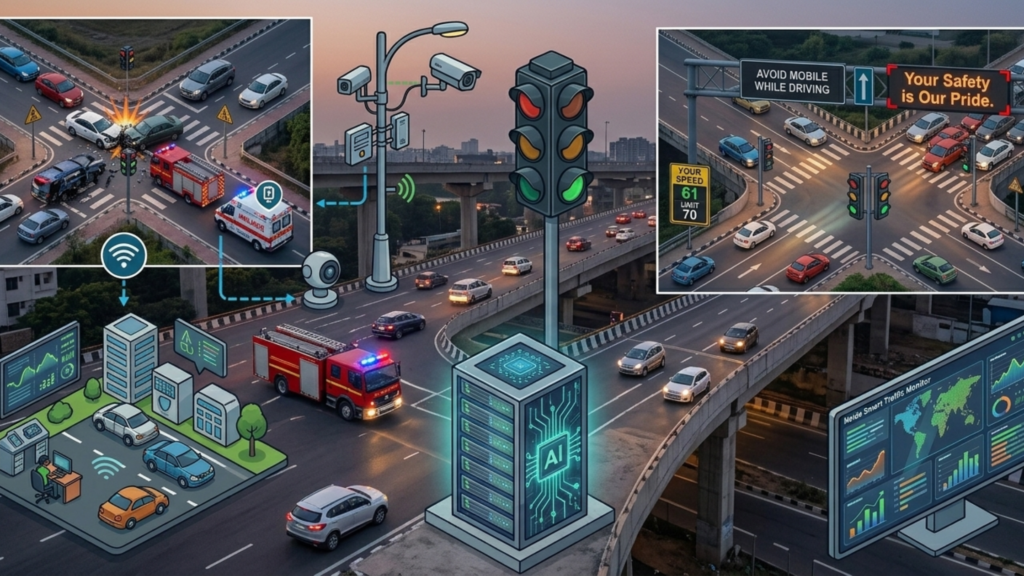
Traffic congestion, long waiting times, and unpredictable road conditions are common challenges in growing cities. As urban traffic continues to increase, traditional traffic systems often struggle to keep up.
This is where AI-based traffic control systems are making a real difference.
Instead of relying on fixed timings and manual monitoring, these systems use real-time data and intelligent algorithms to manage traffic more efficiently. The result is smoother flow, improved safety, and better overall road experience.
Let’s understand the key benefits of AI-based traffic control systems and why they are becoming essential for modern infrastructure.
1. Real-Time Traffic Management
One of the biggest advantages of AI-based traffic systems is their ability to respond instantly to changing conditions.
Unlike traditional signals that follow fixed timers, AI systems:
- Analyze live traffic data
- Detect congestion levels
- Adjust signal timing accordingly
This ensures that traffic moves more efficiently, especially during peak hours.
2. Reduced Traffic Congestion
Traffic jams are not always caused by high vehicle volume. Often, they happen due to poor signal coordination.
AI-based systems optimize traffic flow by:
- Synchronizing multiple intersections
- Giving priority to high-density lanes
- Reducing unnecessary waiting time
This leads to smoother movement and less time spent on the road.
3. Improved Road Safety
Safety is one of the most important aspects of traffic management.
AI systems help improve safety by:
- Detecting unusual traffic patterns
- Identifying potential accident risks
- Managing traffic during emergencies
They can also integrate with display systems and signals to provide real-time alerts to drivers, helping them make safer decisions.
4. Faster Response to Incidents
In traditional systems, it may take time to detect and respond to accidents or disruptions.
AI-based systems continuously monitor roads through cameras and sensors. This allows them to:
- Detect incidents instantly
- Alert authorities quickly
- Adjust traffic flow to avoid further congestion
This rapid response reduces delays and improves emergency handling.
5. Better Use of Infrastructure
Instead of expanding roads, AI helps make better use of existing infrastructure.
By analyzing traffic patterns, these systems:
- Optimize lane usage
- Improve signal coordination
- Reduce bottlenecks
This makes roads more efficient without the need for major physical changes.
6. Data-Driven Decision Making
AI-based traffic systems collect and analyze large amounts of data.
This data helps in:
- Understanding traffic trends
- Planning better road systems
- Improving long-term infrastructure decisions
Authorities can use this information to design smarter cities and more efficient transport networks.
7. Integration with Smart Displays
AI traffic systems work best when combined with real-time communication tools.
For example:
- Variable Message Signs (VMS)
- Speed display systems
- Lane control signals
At Vulcan Advance Intelligence Computing Pvt. Ltd., such intelligent display solutions are integrated with traffic systems to provide clear and timely information to drivers, improving both awareness and safety.
8. Energy Efficiency and Sustainability
Modern AI systems are designed to be energy-efficient.
They:
- Reduce unnecessary signal operation
- Optimize power usage
- Can integrate with solar-powered systems
This supports sustainable infrastructure and reduces operational costs.
9. Reduced Human Dependency
Traditional traffic management often depends on manual monitoring and control. AI reduces this dependency by:
- Automating decision-making
- Minimizing human error
- Ensuring consistent performance
This leads to more reliable and efficient traffic systems.
10. Future-Ready Infrastructure
AI-based traffic control is not just a solution for today-it is designed for the future. As cities grow and vehicle numbers increase, these systems can scale and adapt.
They also support integration with:
- Smart city infrastructure
- Connected vehicles
- Advanced mobility solutions
This makes them a key component of future-ready urban planning.
Conclusion
AI-based traffic control systems are transforming how roads function. They bring intelligence, adaptability, and efficiency into traffic management-something traditional systems cannot achieve alone.
From reducing congestion to improving safety, their impact is both immediate and long-term. At Vulcan AIC, the focus is on developing intelligent traffic and display solutions that support this transformation, helping create roads that are not just functional, but truly smart.
As cities continue to evolve, AI-driven traffic systems will play a central role in building safer, smoother, and more connected mobility environments.

