
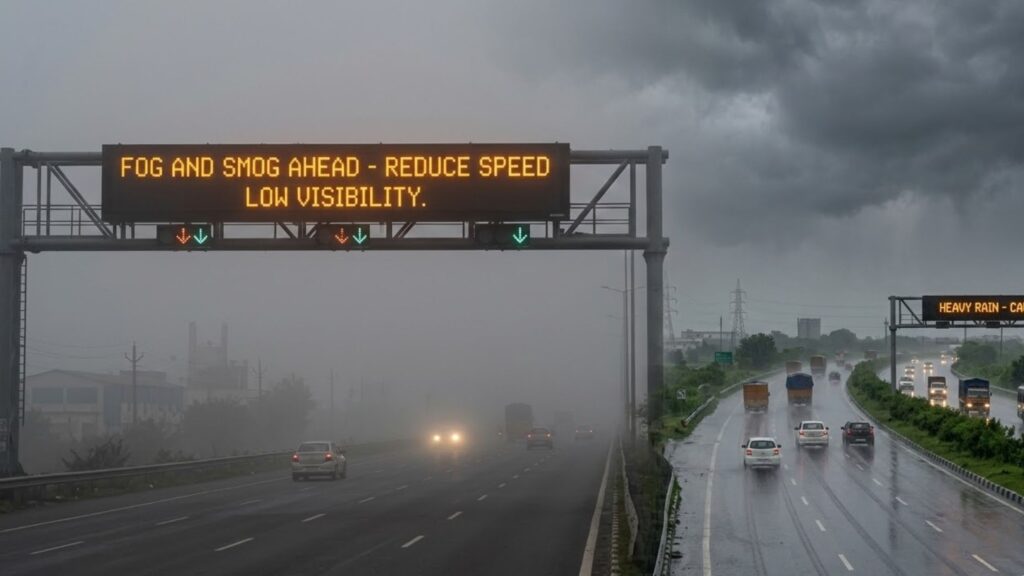
Drive on an Indian highway in winter and you will understand the problem instantly. One moment the road is clear. The next moment a thick wall of fog swallows everything ahead.
- Headlights disappear.
- Lane markings fade.
- Drivers slow down in confusion.
In northern India, especially across states like Punjab, Haryana, and Uttar Pradesh, dense fog shuts down visibility for hours. In the monsoon months, rain creates another challenge. Water reflections blur signals and signage. Add urban smog to the mix in major cities, and visibility becomes even worse.
Yet highways cannot stop functioning.
- Freight must move.
- Emergency vehicles must reach their destinations.
- Millions of commuters still rely on those roads every day.
This is where modern highway display technology becomes more than just a digital board. It becomes a safety system. And visibility becomes the most important factor.
Why Weather Is the Biggest Enemy of Road Communication
Traditional road signs were designed for clear daylight conditions. They work well when the sky is bright and drivers can read information from a distance. But real highway environments are rarely perfect.
In India, visibility can be reduced by:
• Dense winter fog
• Heavy monsoon rain
• Dust storms in desert regions
• Urban smog and pollution
• Night-time glare from headlights
Under these conditions, reflective paint and static boards simply are not enough. Drivers need something stronger — something that actively pushes light through difficult weather conditions. That is exactly what high-intensity LED systems are designed to do.
The Science Behind High-Intensity LED Visibility
Highway LED displays are engineered differently from regular screens. They are built to cut through environmental interference.
High-intensity LEDs produce extremely bright light measured in nits, which determines how visible a display is under different lighting conditions. While indoor displays may use a few hundred nits, highway systems can reach several thousand nits of brightness.
This intensity ensures that information remains readable even when fog scatters light or rain distorts visibility. Modern intelligent displays also use:
• Anti-glare surfaces
• Adaptive brightness control
• High contrast color combinations
• Wide viewing angles
The result is a display that remains visible even when the surrounding environment becomes difficult to see through.
Why Highways Need Dynamic Communication
Weather is unpredictable.
- Fog can appear suddenly.
- Rain intensity can change within minutes.
Static signboards cannot respond to these changes. But intelligent LED displays can.
Variable Message Signs (VMS) allow highway control centers to update messages instantly. When weather conditions change, drivers can receive real-time alerts such as:
“FOG AHEAD – SLOW DOWN”
“HEAVY RAIN – DRIVE WITH CAUTION”
“LOW VISIBILITY – REDUCE SPEED”
These warnings are not just informational. They influence driver behavior before the danger appears. In many cases, those few seconds of early warning can prevent accidents.
Why India’s Weather Demands Stronger Infrastructure
Countries with stable climates do not face the same range of environmental challenges that India does. Within a single highway corridor, infrastructure may face:
• Desert heat above 50°C
• Himalayan cold below freezing
• Coastal humidity and salt exposure
• Urban pollution and dust
Displays installed in these environments must operate reliably year after year. That means designing systems that are not only bright but also durable. Weather-resistant housing, sealed electronics, and high-quality LED modules ensure that these systems keep functioning when conditions become extreme.
Because when weather reduces visibility, the road must still communicate.
From Visibility to Road Safety
The true purpose of intelligent highway displays is not technology.
It is safety.
When drivers receive clear instructions during poor visibility, they make better decisions. Speed reduces. Lane discipline improves. Reaction times increase. Across the world, intelligent transportation systems have shown measurable improvements in accident prevention when dynamic signage is used effectively.
For a country with one of the world’s largest road networks, improving communication on highways is one of the most practical ways to improve safety.
The Systems That Keep Drivers Informed
Modern highways use a combination of technologies working together. These include:
• Variable Message Signs (VMS)
• Overhead Lane Signals (OHLS)
• Intelligent Traffic Lights
• Hybrid User Fare Displays (HUFD)
• Tunnel safety signage systems
Together, these create an ecosystem where roads can communicate information instantly and clearly. Even when the weather makes everything else difficult to see.
The Human Side of Infrastructure
When drivers pass a digital highway display warning about fog or lane closures, they rarely think about where that system came from. They simply read the message and continue driving. But behind every functioning display is a long process of engineering, testing, manufacturing, and deployment.
Teams design systems that can survive extreme weather conditions. Engineers test brightness levels, electronic durability, and structural safety.
Infrastructure may appear simple from the outside, but building systems that work reliably in the real world requires deep expertise.
Making the Invisible Work Visible
Across India’s highways, intelligent display systems quietly perform a crucial role.
- They guide traffic.
- They warn drivers.
- They reduce confusion during difficult conditions.
Many people see these systems every day without knowing who designed or built them. That is the nature of infrastructure. It works in the background. But behind many of these systems is an Indian OEM working to improve road communication and safety through intelligent LED display technology.
That company is Vulcan Advance Intelligence Computing Pvt. Ltd. (Vulcan AIC).
From Variable Message Signs to overhead lane signals and smart toll displays, Vulcan AIC engineers and manufactures intelligent traffic communication systems designed for India’s toughest environments. Because even when the weather becomes unpredictable, the road still needs to speak clearly.
And someone has to build the systems that make that possible.

