
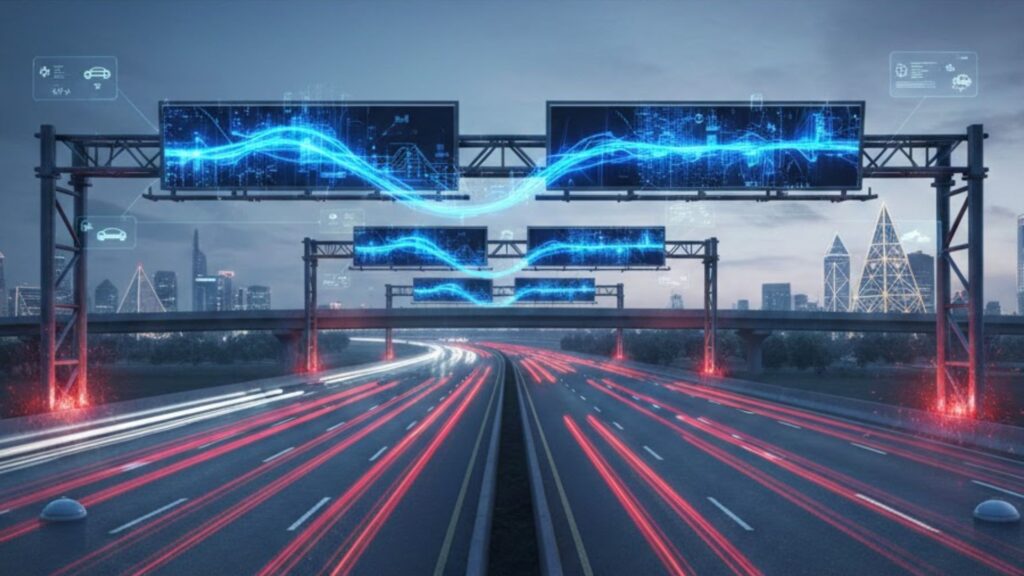
India’s road infrastructure is evolving rapidly. As highways become busier and traffic density increases, static road signs are no longer enough to ensure smooth mobility.
Modern roads require systems that communicate in real time. One such system is the Smart Variable Message Display (VMD).
But what exactly is a smart VMD, and how does it work?
What Is a Smart Variable Message Display?
A Smart Variable Message Display (VMD) is an electronic signboard that can change its content dynamically based on real-time road conditions.
Unlike traditional static signs, VMDs:
- Display real-time traffic information
- Update automatically
- Integrate with central control systems
- Operate remotely
They are commonly installed on:
- National highways
- Expressways
- Urban corridors
- Toll plazas
- Smart city intersections
Core Components of a Smart VMD System
A modern VMD system typically includes:
1. High-Brightness LED Display Modules
Designed for clear visibility under sunlight, rain, fog, and night conditions.
2. Intelligent Control Unit
Processes data from sensors and central systems.
3. IoT Connectivity
Enables real-time communication with traffic control centers.
4. Weather & Traffic Sensor Integration
Allows automated message updates.
5. Power Management System
Includes grid power, backup, or solar integration.
How Smart VMDs Work
Smart VMDs are connected to:
- Traffic monitoring cameras
- Speed detection sensors
- Weather monitoring systems
- Centralized traffic management platforms
When a change occurs (accident, congestion, fog), the system updates the display instantly.
Instead of manual intervention, messages are triggered automatically based on data inputs.
Role in Intelligent Transport Systems (ITS)
Smart VMDs are a key component of Intelligent Transport Systems (ITS).
They function as the communication layer between:
- Infrastructure
- Authorities
- Road users
By delivering timely information, they convert passive highways into responsive systems.
Why Smart VMDs Are Becoming Standard in India
Government and infrastructure authorities increasingly include VMDs in:
- Highway development projects
- Smart city initiatives
- Expressway contracts
- Urban traffic modernization programs
The reason is simple: infrastructure today must be intelligent, not just physical.
A Smart Variable Message Display is not just a digital board.
It is a real-time communication system that enhances visibility, awareness, and infrastructure responsiveness.
As India moves toward smarter mobility, VMDs are becoming foundational elements of modern road design.

