
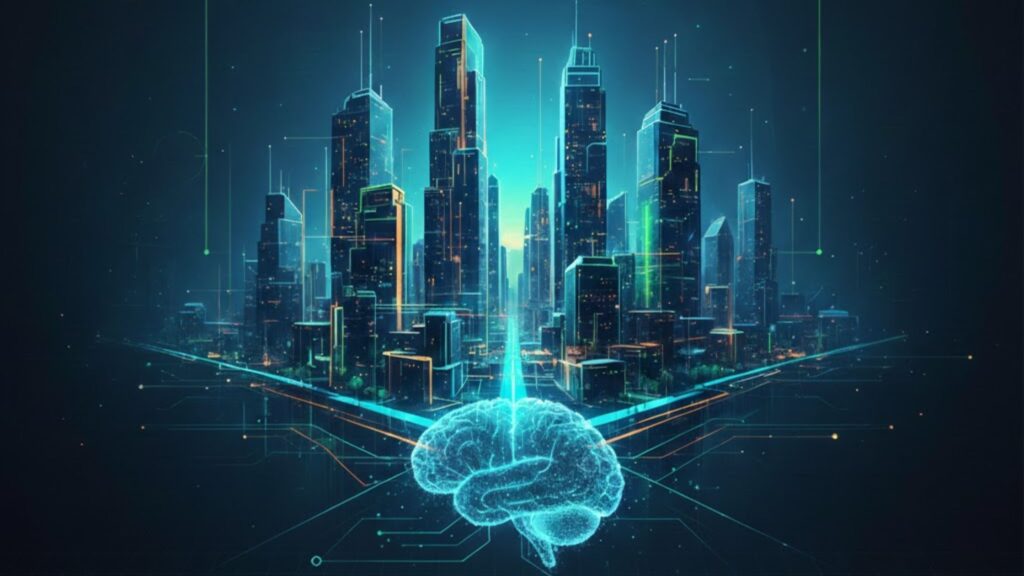
For decades, infrastructure was built with one main goal – strength.
Roads had to last long, signals had to stay visible, and systems had to work without failure. That approach worked well for its time. But today, the world has changed.
Cities are growing faster. Traffic is heavier. Decisions need to be made in real time. In this new reality, strong infrastructure alone is not enough. What we need now is intelligent infrastructure – systems that can sense, learn, and respond.
This shift from engineering to intelligence is quietly transforming how modern infrastructure works.
What Does “Intelligent Infrastructure” Really Mean?
Traditional infrastructure follows commands.
Intelligent infrastructure understands situations.
In simple words:
- Traditional systems display information
- Intelligent systems process information
- Advanced systems act on information
For example:
A normal traffic sign shows a fixed message.
An intelligent display can change messages based on traffic flow, weather conditions, accidents, or emergencies – all in real time.
This ability to observe, decide, and adapt is what defines intelligent infrastructure.
Why Traditional Infrastructure Is Struggling Today
Modern challenges are dynamic, not static.
Some common problems with old systems include:
- Fixed signals that cannot respond to changing traffic
- Delayed information reaching drivers and authorities
- No learning from past data
- Manual control leading to slower decisions
As cities expand, these limitations lead to:
- More congestion
- Higher accident risks
- Slower emergency response
- Increased stress on public systems
Infrastructure today needs to think faster than the problem, not react after damage is done.
The Role of Intelligence in Modern Infrastructure
Intelligent infrastructure works like a living system.
It combines:
- Sensors
- Real-time data
- Connectivity
- Decision logic
- Continuous feedback
This allows systems to:
- Adjust traffic messages instantly
- Improve road safety
- Reduce human error
- Support faster government decisions
- Create smoother urban movement
Instead of waiting for instructions, systems become aware of their environment.
From Hardware to Systems That Learn
Earlier, infrastructure success was measured by:
- Durability
- Visibility
- Power efficiency
Now, success is measured by:
- Awareness
- Accuracy
- Adaptability
Modern infrastructure systems are designed to:
- Learn from traffic patterns
- Predict congestion
- Support emergency situations
- Improve over time through data
This learning ability is what separates machines from systems.
Human-Centric Technology: The Missing Link
Technology is only meaningful when it serves people.
Intelligent infrastructure focuses on:
- Safer roads
- Clear communication
- Reduced confusion
- Better public experience
When systems respond faster, lives are protected.
When information is clear, stress reduces.
When decisions are data-driven, outcomes improve.
This is why modern infrastructure design now places humans at the center, not just machines.
Why Balance Matters in Intelligent Systems
One common mistake is assuming that more technology automatically means better results. That’s not true.
The real challenge is balance:
- Between automation and human control
- Between data and decision-making
- Between speed and reliability
Well-designed intelligent infrastructure is calm, stable, and precise – not noisy or overwhelming. It supports decision-making instead of replacing it blindly.
How This Shift Shapes the Future
The future of infrastructure is not just smart – it is thoughtful.
We are moving toward systems that:
- Communicate clearly
- Learn continuously
- Adapt responsibly
- Support sustainable growth
This evolution helps cities become:
- Safer
- More efficient
- More humane
Companies working in this space, including organizations like Vulcan AIC, are part of this larger shift – moving infrastructure from rigid engineering into adaptive intelligence.
Final Thoughts: Infrastructure That Understands
The most important change happening today is not technological – it is philosophical.
Infrastructure is no longer just about building strong structures.
It is about building systems that understand the world around them.
When infrastructure learns, cities move better.
When systems adapt, people feel safer.
And when technology is guided by intelligence and care, progress becomes meaningful.
Vulcan AIC-Designing intelligent infrastructure for a smarter tomorrow.

